melt season is a high-end niche fragrance brand based in Shanghai. It seeks to reinterpret traditional sensibilities through a contemporary lens, using scent to connect people with nature. For this project, Baicai Design was commissioned to create a spatial setting for the launch of a new fragrance series, integrating art, space, and product into a unified sensory experience.
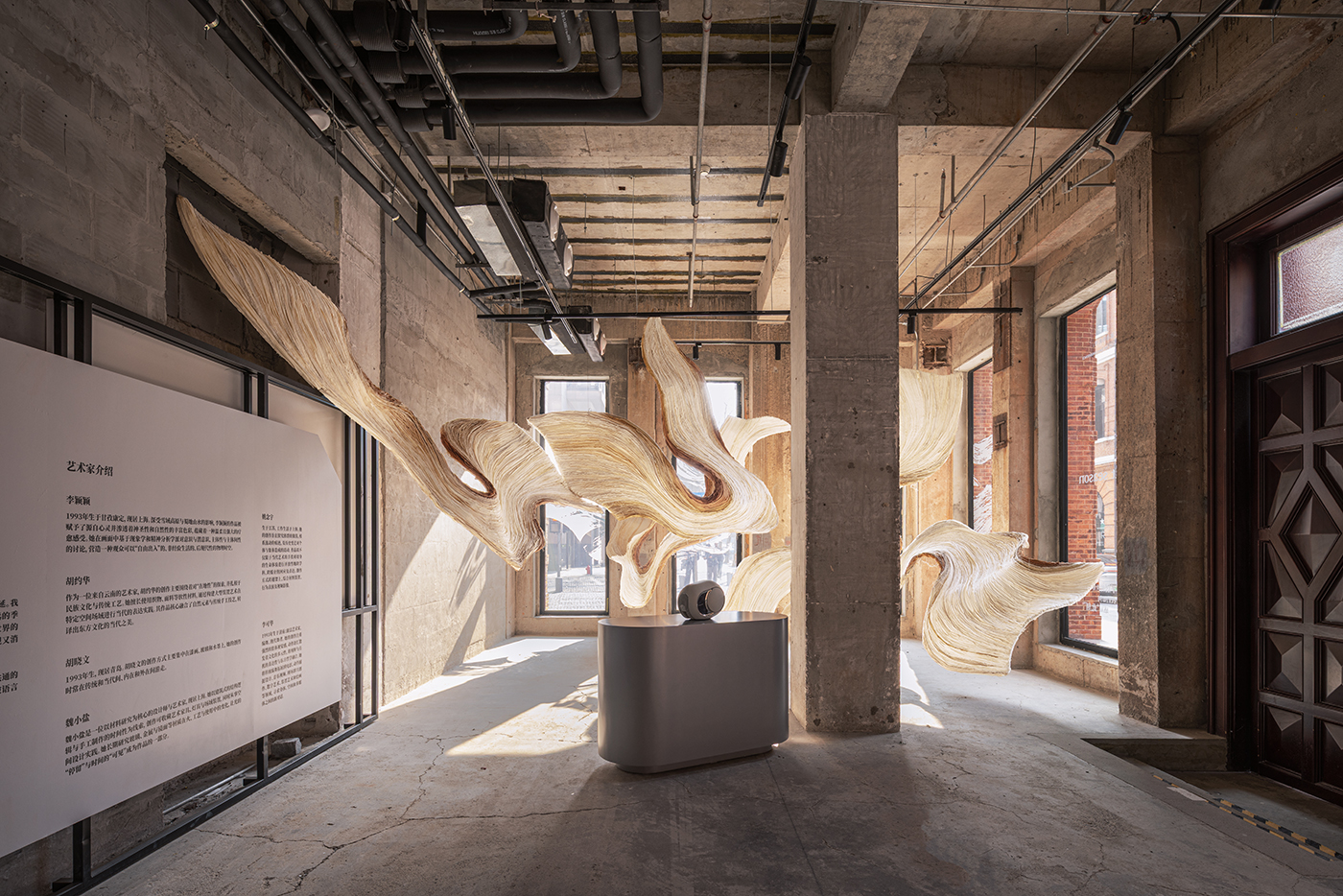
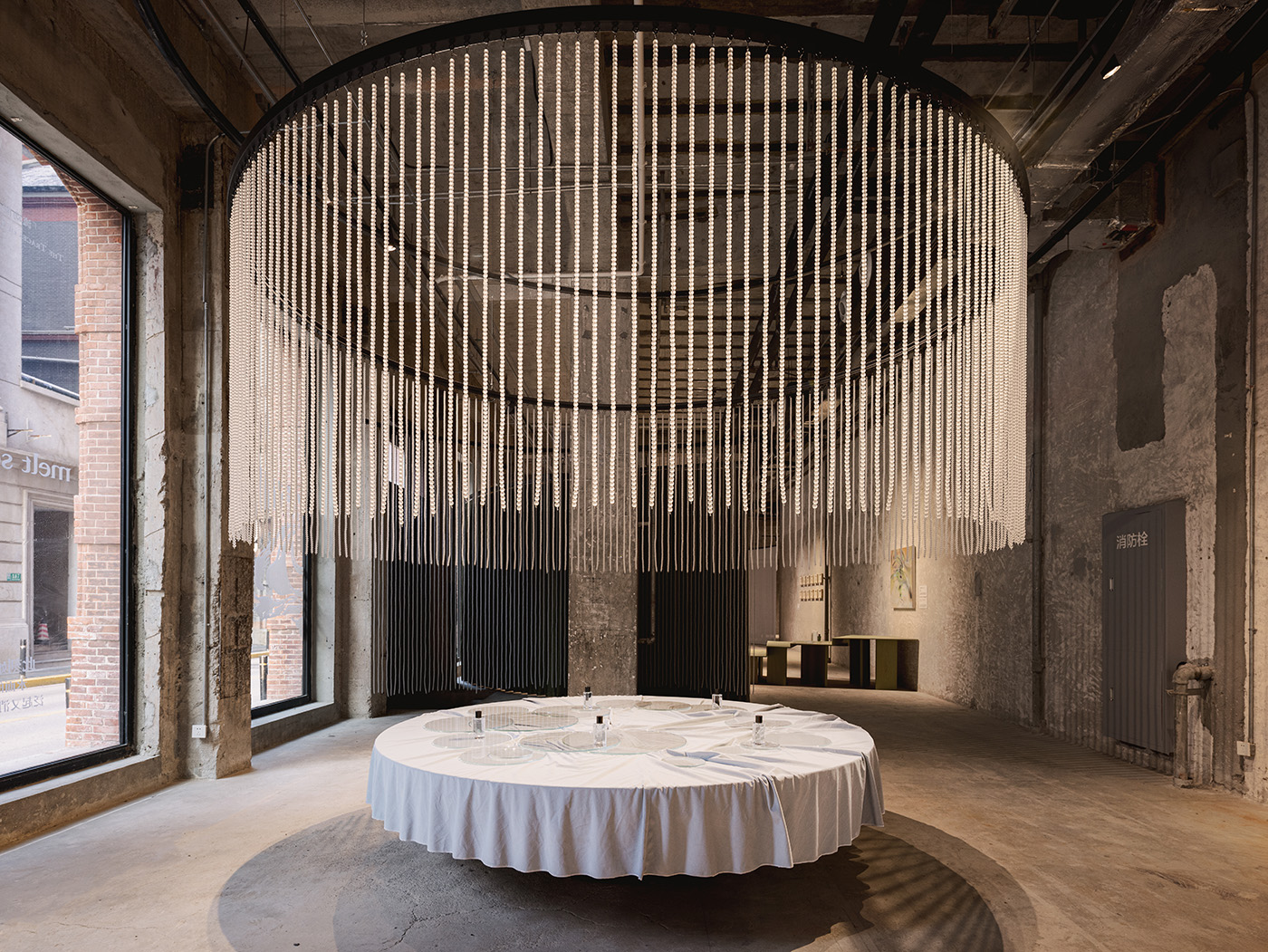
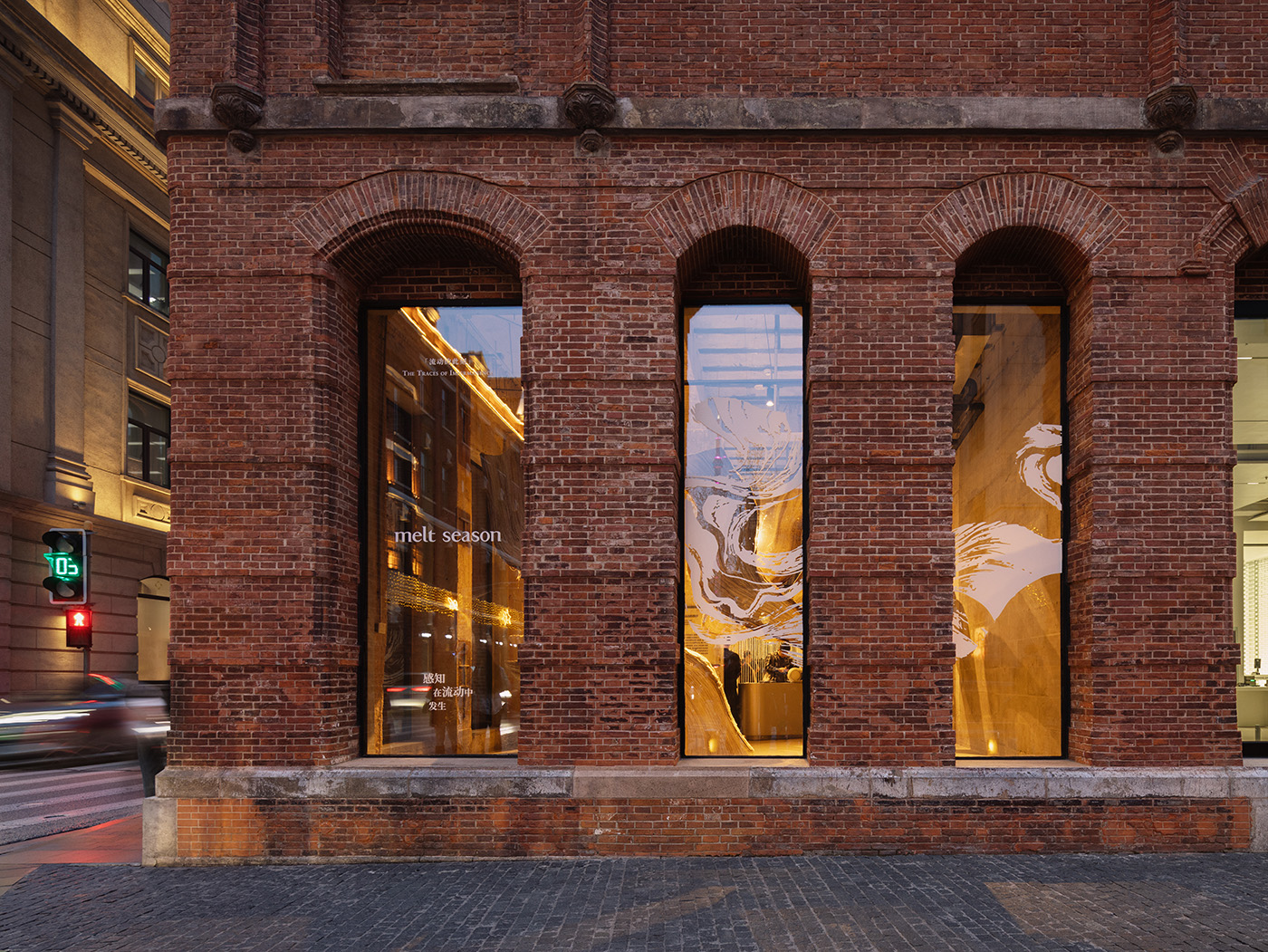
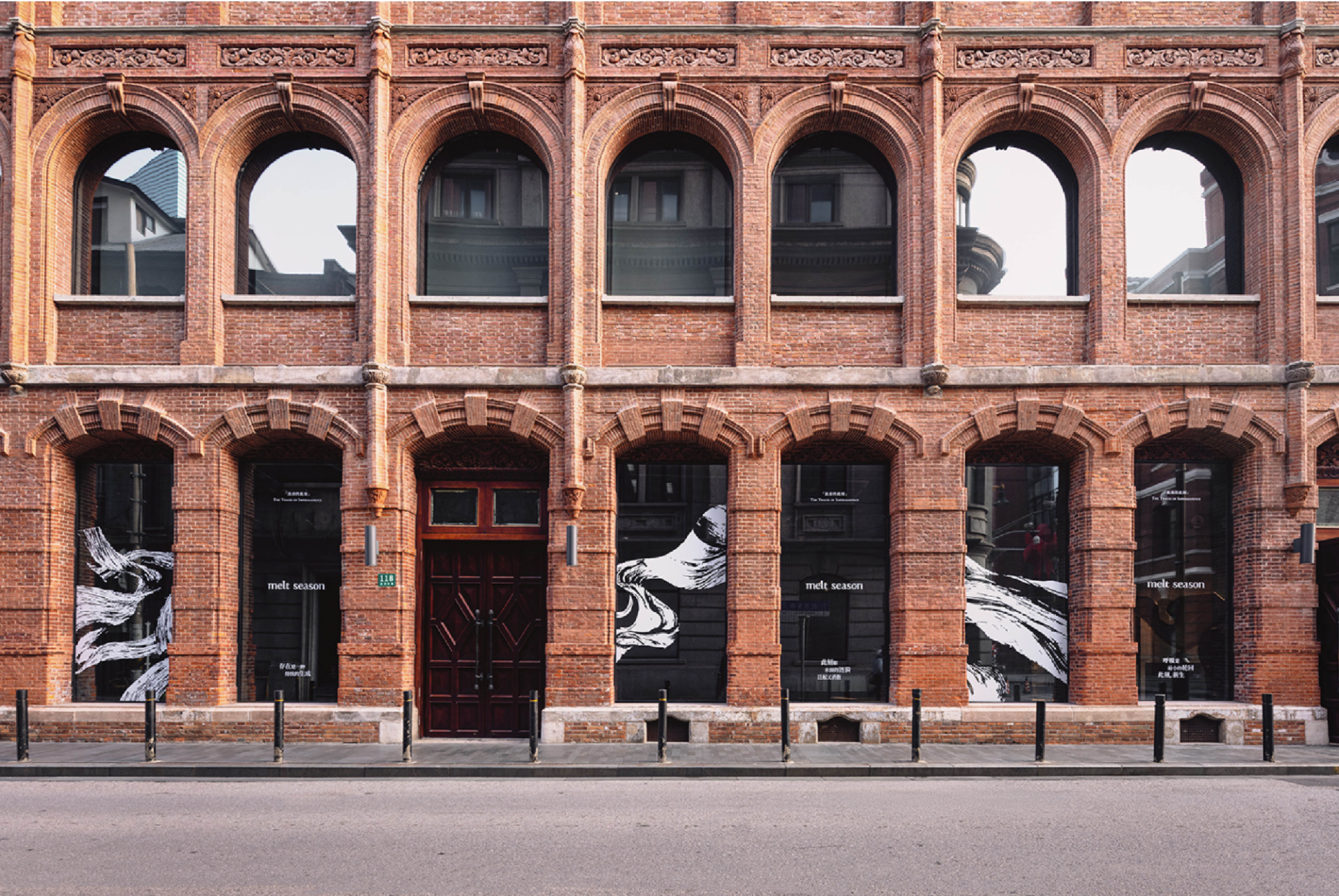
The exhibition is located on the ground floor of the Rockbund Yuan Zongan Meifeng Building in Shanghai. Originally a historic structure from the early 20th century, the building was later renovated by architect David Chipperfield. The exterior retains its red-brick façade and historical character, while the interior offers a tall, open, and undefined volume. Within this context, we introduced installations and display systems to activate the space without disrupting its existing architectural presence.
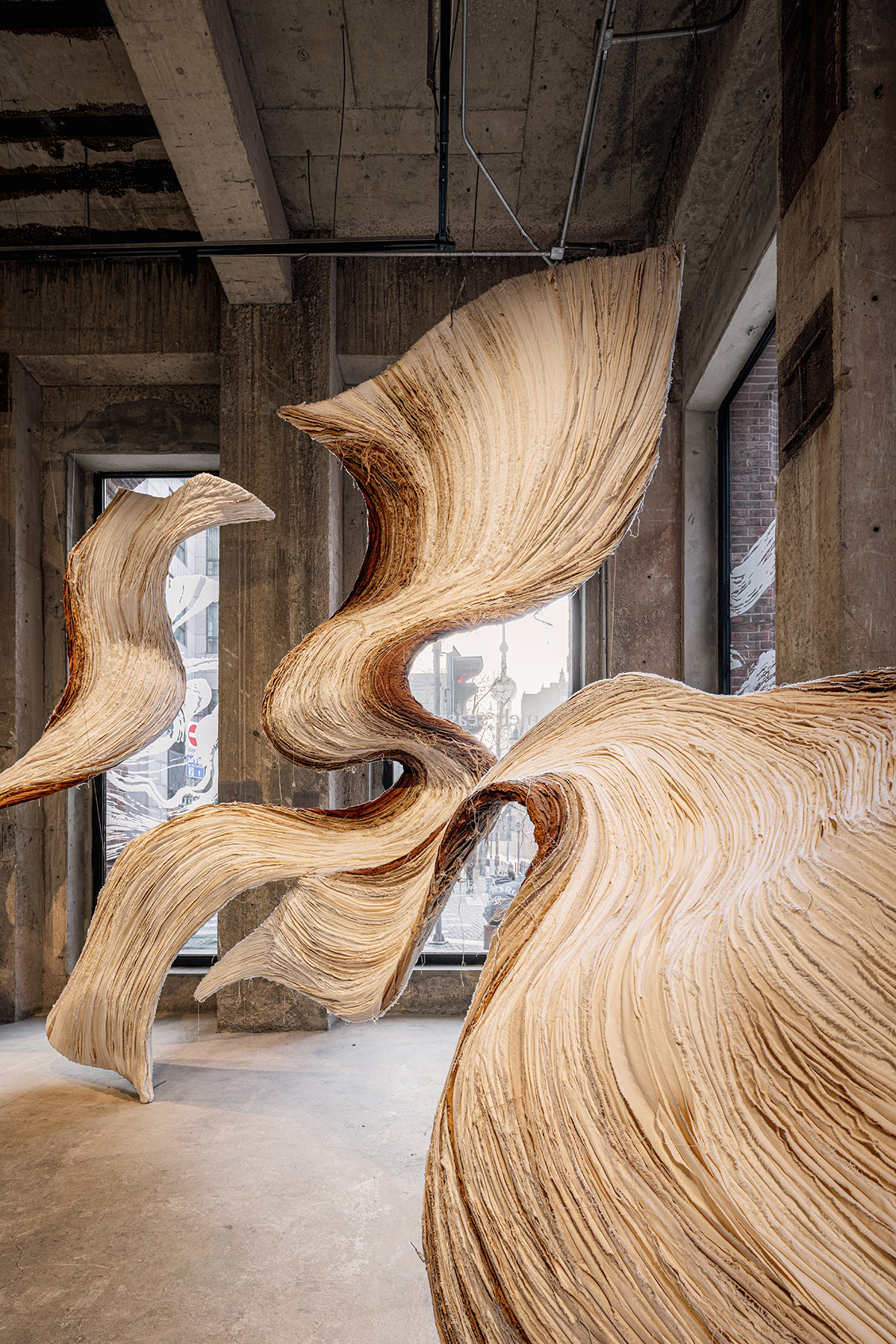
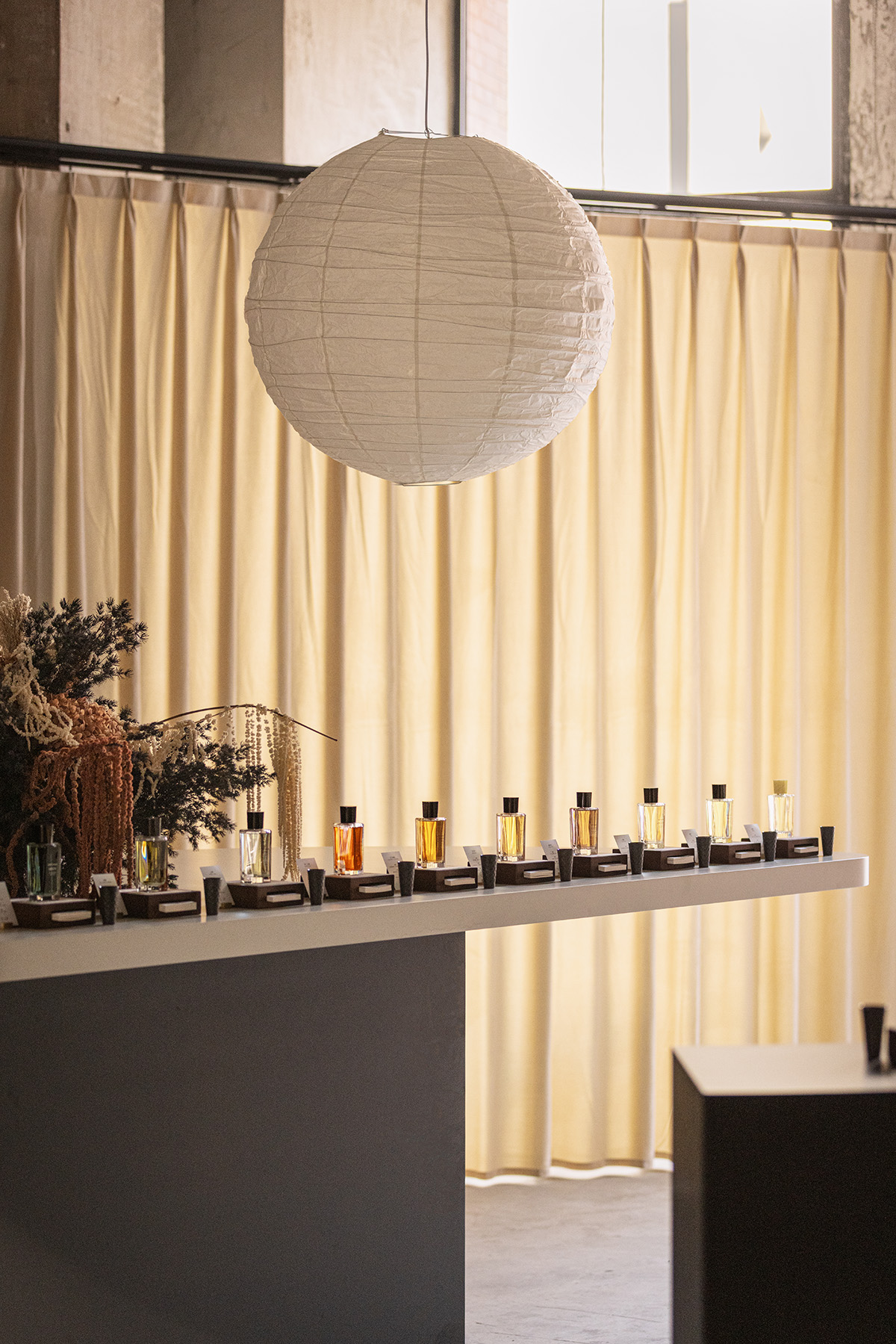
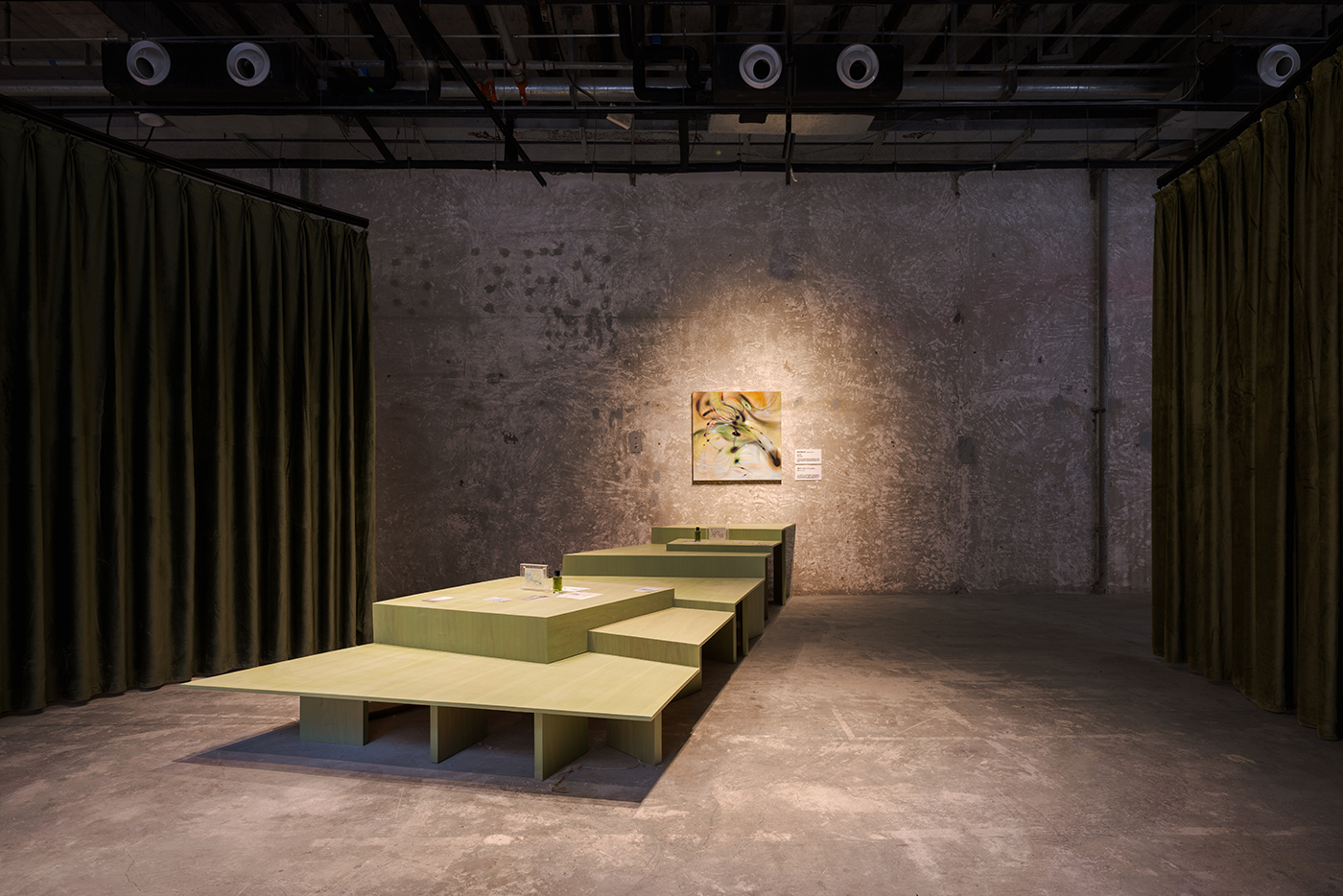
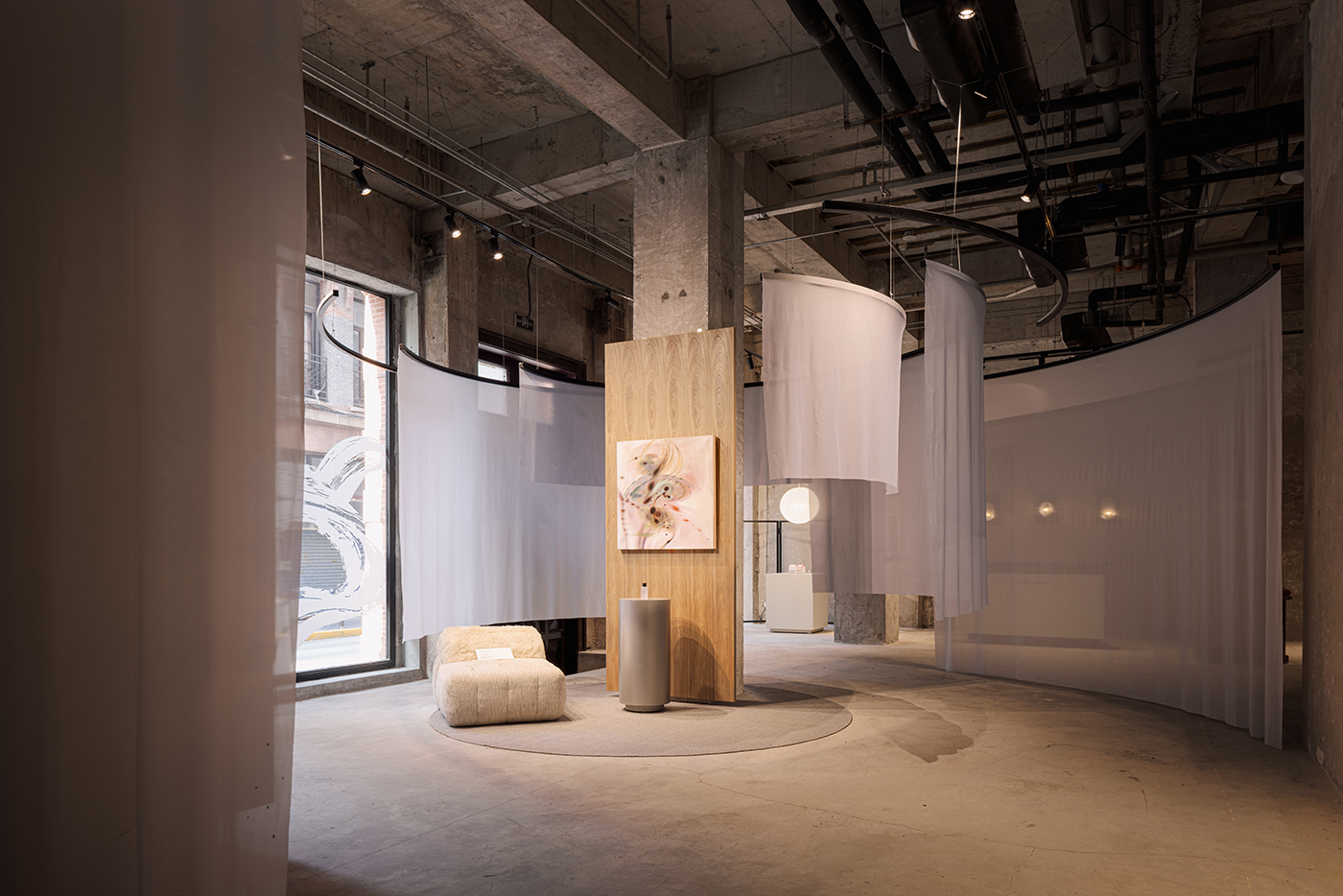
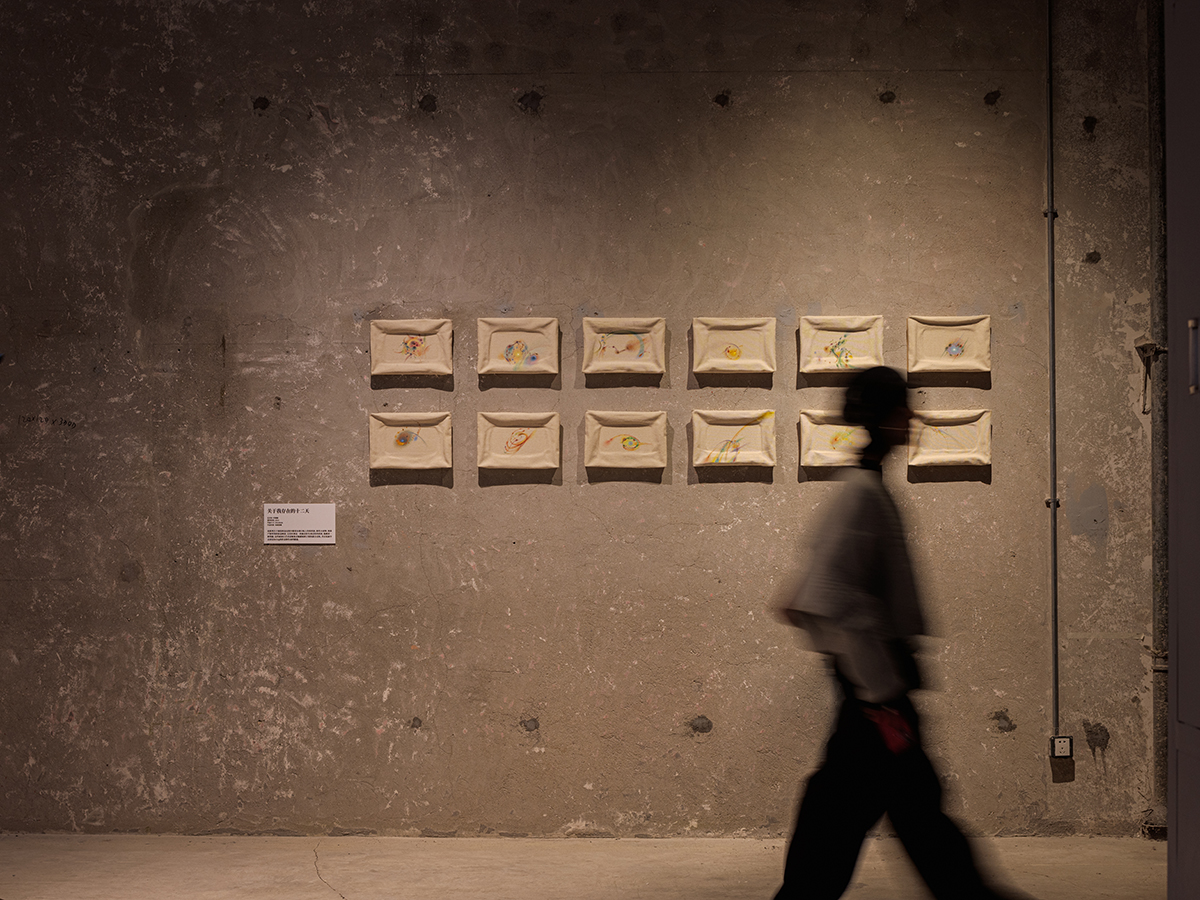
Titled The Traces of Impermanence, the exhibition centers around three new fragrances—Anitya, The Untamed, and Ethereal. The brand collaborated with artist Li Yingying, who created corresponding artworks inspired by each scent. The spatial design is structured around both product and artwork, developing a cohesive display language that translates olfactory qualities into spatial and visual experiences.
On the façade, we abstracted the spatial installation language into graphic elements and embedded them into the glass surface, forming a unified outward expression together with the brand identity. The façade becomes an extension of the exhibition concept. By aligning interior content with each window, the space is both revealed to the street and transformed into a visual interface.
The plan follows a linear sequence of experience. Upon entry, visitors are first drawn to a central installation, then proceed through three distinct exhibition zones, each dedicated to a fragrance. Semi-open partitions define individual atmospheres, allowing scent, artwork, and spatial elements to unfold within their own contexts.
Beyond the three exhibition zones lies the area for brand events, presentations, and retail. This space continues the material and spatial language while remaining intentionally understated. By reducing its visual presence, the focus remains on the exhibition experience, allowing the primary narrative to stay intact.
We see this exhibition not merely as a presentation of products, but as a spatial practice of perception. Scent, material, and body interact within a shared environment, turning a fleeting moment into a memorable experience. In the flow of time, space becomes a medium that holds the ephemeral, and a way for people to form a connection with the brand.